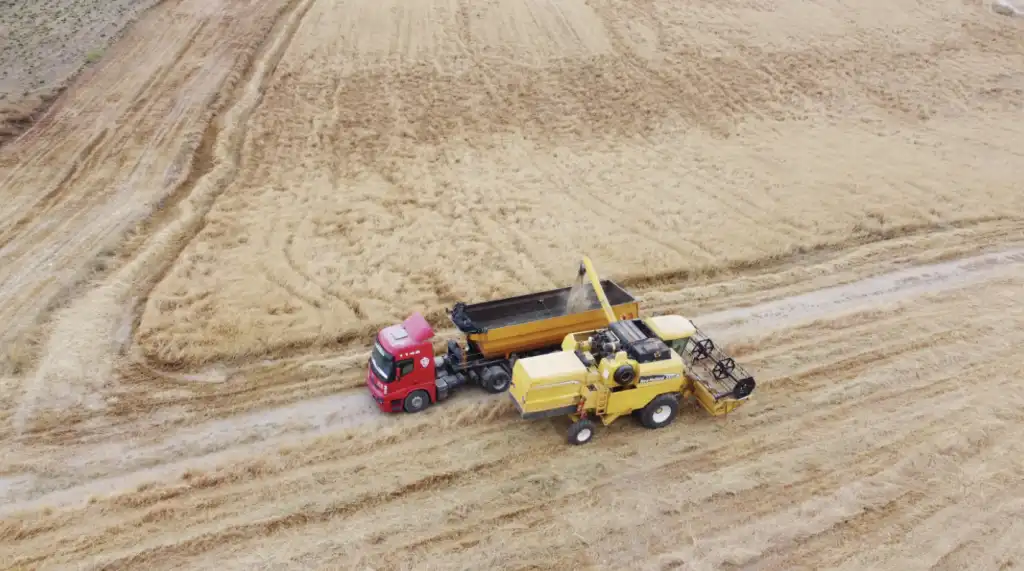


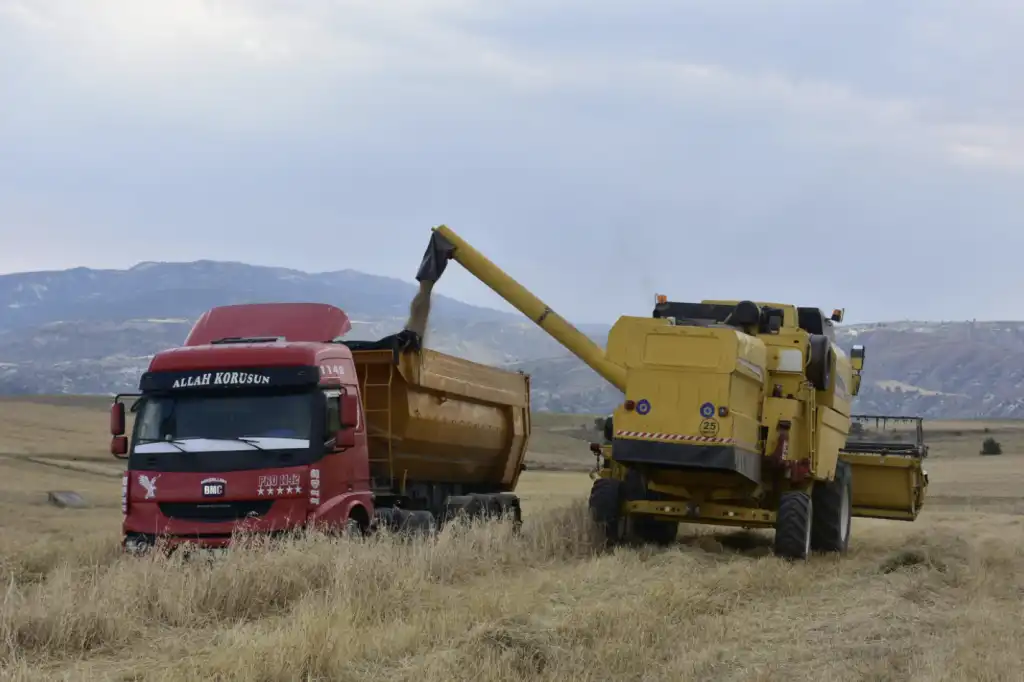
The harvest of the planted crops has started at Burdur Mehmet Akif Ersoy University (MAKÜ).
In the studies carried out by the MAKÜ Agriculture, Livestock, and Food Research Application and Research Center Directorate, the harvest of different forage crops such as barley, sainfoin, triticale, barley, and oats planted on approximately 3 thousand decares of land is being carried out.
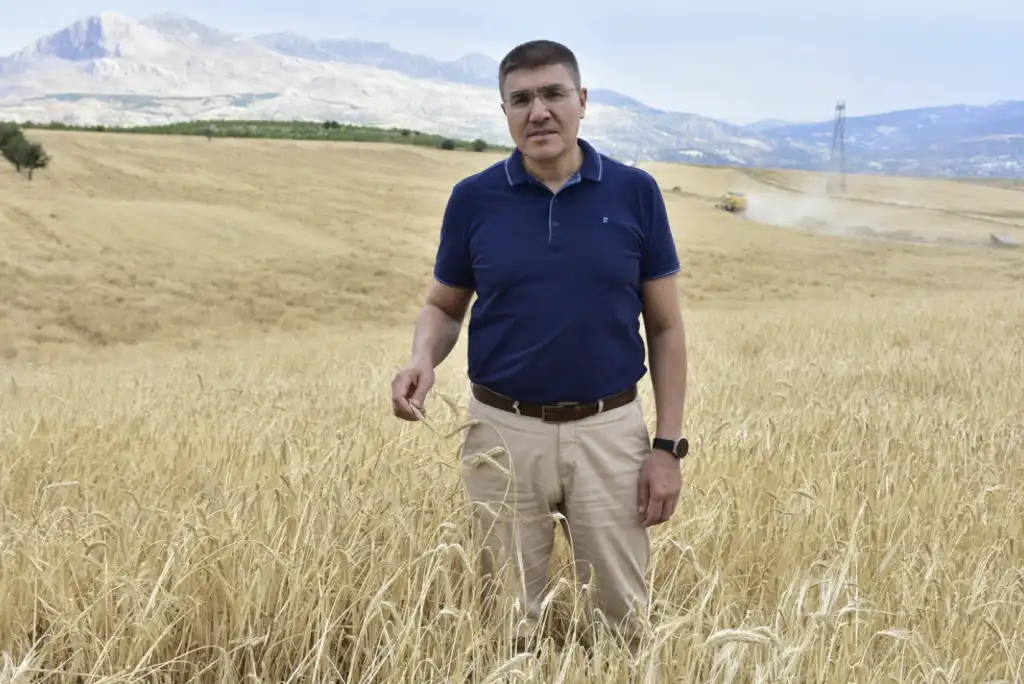
Prof. Dr. Hüseyin Dalgar: The Experience and Academic Knowledge Reflect on the Yield
Stating that the harvest of the planted crops is going efficiently, Rector Prof. Dr. Hüseyin Dalgar said the following about the harvest: Approximately 3 thousand decares of arable land on the campus were planted this year as every year. The harvest is currently ongoing. There is a very good yield due to the knowledge gained from previous years' experiences and the impact of rainfall. As we are a pilot university in the field of livestock, we conduct very serious research on forage crops. 8 different forage crops are planted on the university's lands. After these are harvested, they are analyzed in a laboratory environment. The results obtained from here contribute to the literature as scientific publications and are shared with the relevant sectors.
In this context, 2,400 decares of the 3 thousand decares of arable land suitable for cultivation have been planted this year and are being harvested. Currently, 600 decares of land have been left fallow for reclamation purposes. There are many different products here such as triticale, sainfoin, oats, barley, and wheat. These products are low-water-demanding, high-nutritional-value, and high-yield products. Our team conducts experiments on these every year to increase the yield. A portion of the products obtained from this harvest is used to meet the nutritional needs of the animals at our Application and Research Center, which we call the MAKÜ Farm. Another portion is evaluated by being sold to the sectors in need in the market. This also provides a self-income for our university.
We Contribute to the Country's Production by Protecting Every Square Meter of Our State's Land
Making statements about the studies carried out, Rector Prof. Dr. Dalgar continued his words as follows: The prominent aspect of what we do differently from other sectors is this: the liquid manure of large cattle at our university is given to the biogas plant within the framework of a protocol made with the biogas plant. After energy production, these are poured onto the land as liquid fertilizer. In the studies conducted on this subject; while the average yield per decare in barley was around 300 kilos, this year, with the effect of this liquid fertilizer and the scientific improvements made, a yield of around 500 kilos has been achieved. The information given to us by our expert agricultural professors is in this direction. This is quite pleasing. Of course, we also share this information with the sector. As a university, we both evaluate our land and conduct scientific publications, scientific studies, and research on this land, and we share the results obtained from here with the sector. Hopefully, in the next period, we will carry the successful studies we have done in the field of livestock to the field of plant production. We will share this with our university staff, the people of Burdur, and the public in the coming months. We know that Burdur has significant potential in plant production. We are in an academic structuring to activate this potential.
I wish our harvest to be fruitful and blessed. We will continue to protect every square meter of our state's land and evaluate every square meter of land to contribute to the production of this country. We are in the effort to share the results obtained from our studies with the agriculture and livestock sector of the whole country, especially Burdur, so that they can benefit from this information and experience.
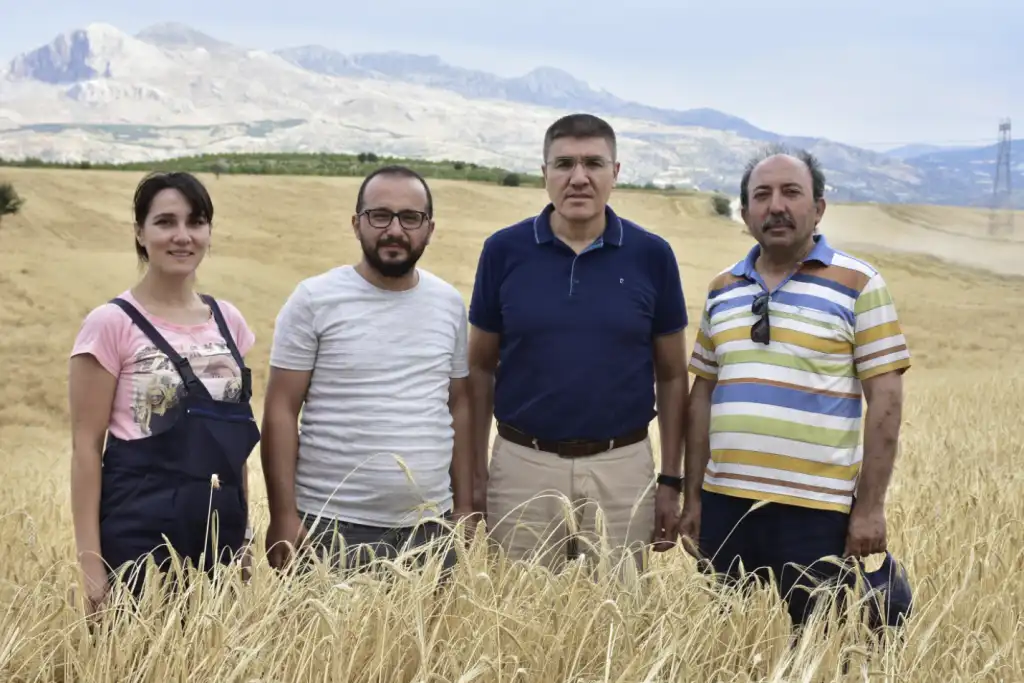
Agriculture, Livestock, and Food Research Application and Research Center Director Prof. Dr. Şenol Güzel stated that the harvested crops within the plant production area are used for feeding the dairy group animals and said: With this work we are doing, we are also producing an alternative to corn silage. We are carrying out these activities to meet the silage we can make on arid land and feed to animals from green grass silage. We transport these silages to our farm located in the MAKÜ Campus area and provide the feeding of the animals there.
Providing information about plant production in the silage studies carried out, Lecturer Müge Güvenç said: “We will harvest 600 decares of oats, 700 decares of barley, 530 decares of sainfoin, 15 decares of alfalfa, and 450 decares of triticale on our land, and we have left 600 decares of land fallow. Oats were used as green grass silage in this area. It was mowed and ensiled between the milk stage before heading. We also started our grain harvest as of today.”
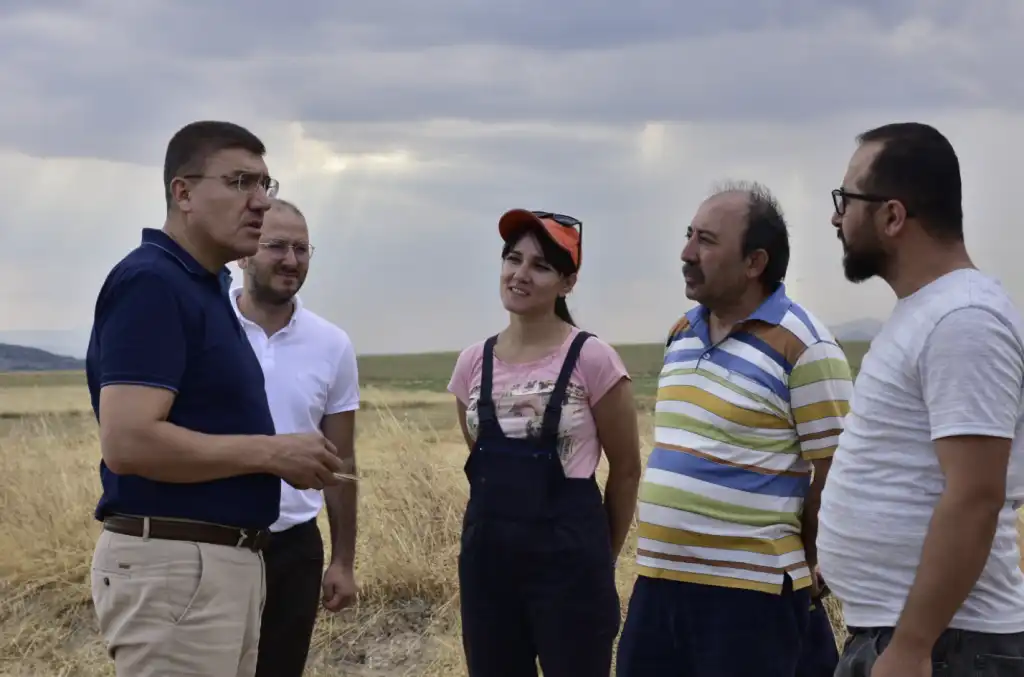
MAKÜ Also Contributes to the Sustainability of the Soil
Speaking about soil reclamation, Lecturer Dr. Bekir Tosun said, “We are trying to reclaim our university's land using organic matter sources at a rate of 400 decares per year. What benefit did this provide us? As a university, we have reduced the use of chemical fertilizers by approximately 80 percent. Thus, we both contributed to our university and increased the sustainability of the soil,” he said.